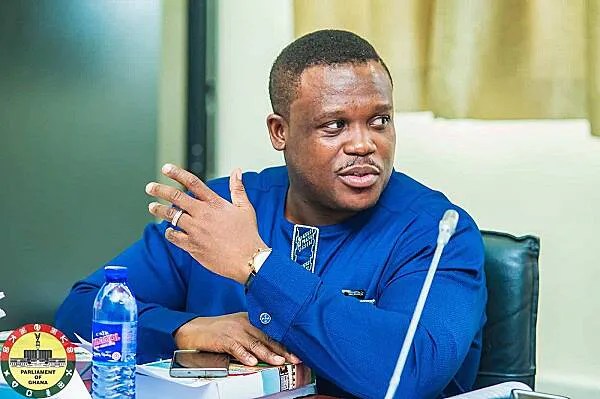
The Minister for Communication, Digital Technology and Innovation, Sam Nartey George, has reaffirmed his unwavering support for the Human Sexual Rights and Family Values Bill (Anti-LGBTQ+ Bill), declaring that the proposed legislation remains a key concern despite growing calls for the government to prioritise other pressing national issues.
His comments come in the wake of remarks by President John Dramani Mahama, who suggested that while the bill holds significance, it does not rank among Ghana’s most urgent challenges at this time.
“I explained during my recent engagement with the World Affairs Council that it is not the most important issue we face as a nation. We are still grappling with the provisions of basic needs of education, health care, jobs, food, clothing, and shelter,” the President stated during a March 30 interaction with civil society organisations at Jubilee House.
The President’s position has sparked renewed national debate, with sections of the public, particularly religious and advocacy groups, questioning what they describe as mixed signals from the government on the bill’s urgency.
But speaking to journalists at the Ministry on April 10, Mr George pushed back firmly against suggestions that the legislation should be sidelined. He argued that critics underestimate the seriousness of issues the bill seeks to address, particularly around family protection and societal values.
“People don’t understand what this is about. Just last week, I had to help a father whose 21-year-old son had been abducted by someone who was sodomising him as his gay lover.
“A 55-year-old Ghanaian, UK Ghanaian, kept the man’s 21-year-old son away from him. Thanks to COP Lydia Donkor, Director General of CID, who worked with our team to identify, track the number, and identify the person, and rescue the boy just last week,” he revealed.
Mr George maintained that such incidents highlight the continued relevance of the bill and justify sustained attention to its passage.
“To those who say we have other priorities, this is a priority for us. This is a priority for us. Any country worth its salt can deal with multiple priorities at the same time,” he stated.
“We’re not saying we should stop building roads because we don’t have enough hospital beds. We’re not saying we should stop building schools because we don’t have enough pipe-borne water flowing through our taps.
“We are dealing with our roads, we are dealing with our hospitals, we are dealing with our schools, we are dealing with water, and we will also deal with our family values.”
The Ningo-Prampram legislator further underscored that his stance reflects the expectations of his constituents, pointing to his increased electoral margin as evidence of public backing.
“As for me, as the Member of Parliament for Ningo-Prampram, the people voted for me, and that was one of the reasons why they increased my vote margin from sixty-nine per cent to seventy-four per cent. They said, ‘Sam, go back to Parliament and make sure this bill is passed.
“So for my people in Ningo-Prampram and me, this is a priority, along with our roads, which are getting fixed, along with our health clinics, which we are building, along with our school blocks that we are building, and the water problem that we are tackling. So it remains a priority for us.”
The Human Sexual Rights and Family Values Bill continues to divide opinion across the country, with supporters framing it as necessary for cultural preservation, while critics raise concerns about rights, governance priorities, and Ghana’s international commitments.
DISCLAIMER: The Views, Comments, Opinions, Contributions and Statements made by Readers and Contributors on this platform do not necessarily represent the views or policy of Multimedia Group Limited.
DISCLAIMER: The Views, Comments, Opinions, Contributions and Statements made by Readers and Contributors on this platform do not necessarily represent the views or policy of Multimedia Group Limited.
Source: www.myjoyonline.com