Albert K. Salia
Politics
4 minutes read
A political scientist, and a politician, have kicked against the recommendation of the Constitution Review Committee to introduce a legally bounded campaign season to curb perpetual electioneering and allow governments more time to govern.
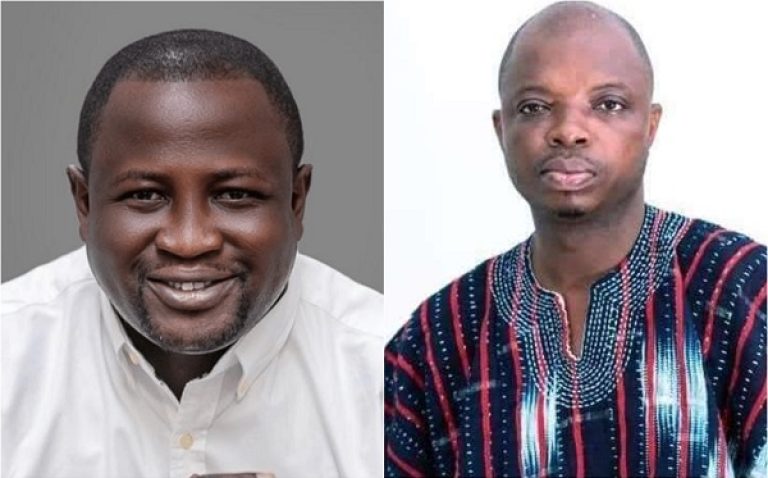
The two, Ransford Brobbey, the political scientist, and Bernard Mornah, the politician, argued that the recommendation was highly controversial since political parties oil the wheels of democracy.
They were speaking in separate interviews about the CRC’s proposal to schedule electioneering.
Context
The CRC has proposed far-reaching reforms to rein in the cost of elections, recommending constitutional limits on the duration of political campaigns and strict controls on how much political parties and candidates can spend.
It, therefore, recommended to cap the period of electioneering and campaigning to a defined number of days or weeks immediately before a general election.
The CRC suggests a maximum campaign window of 120 days, before which no electioneering or campaign activity, as defined by law, would be permitted.
Activities
Mr Brobbey pointed out that the fourth republican dispensation had been fanned by the activities of political parties.
“This is to say we cannot think about democracy save in terms of parties and partisanship,” he said.
He said what the country had failed to do in the body politic was to draw the line between a ruling party and government.
“That has been the bane of our democracy, causing extreme politicisation and polarisation of policies and actions,” he stated.
Mr Brobbey argued that the country needed political parties to be active and adequately prepared to take up the mantle of government.
“That’s non-negotiable. Because the silencing of party activities is the death of democracy.
We’d rather silence dissent, thrash the activities and importance of opposition parties, limiting their impact and influence in ensuring accountability,” he stated.
He explained that political parties did not just get on the electoral platforms, as internal activities alone took time to plan and execute before they reached the national scene.
Financing
Mr Brobbey, a Research Associate at the Imani Centre for Policy and Education, said that what was needed were frameworks to regulate political financing.
“Political financing has been a channel for illicit financial flows, money laundering and corruption.
“Building the capacity of the Electoral Commission (EC) to audit and refer cases to the Auditor General, anti-corruption and anti-money laundering institutions will be a reform in the right direction,” he said.
Campaign
On his part, Mr Mornah, who is also a leading member of the People’s National Convention (PNC), said he found the matter controversial.
He explained that in practice, governments—particularly the Executive—used virtually every available platform to campaign.
“They highlight their achievements, defend their record, critique the performance of previous administrations and often run down opposition political parties.
“During such periods, it can easily appear as though the opposition is absent or inactive,” he stated.
Mr Mornah pointed out that Article 55 of the Constitution clearly provided that political parties shall contribute to shaping the political will of the people.
“If opposition parties critique government policies or propose alternative solutions, would such legitimate democratic activity then be classified as campaign messaging?” he asked.
Governance
Mr Mornah noted that governance itself was a continuous process.
“Once a government is elected, it must be held accountable on a policy-by-policy, step-by-step basis to ensure it does not stray from or depart from expected democratic norms.
“Oversight, critique and the presentation of alternatives cannot reasonably be suspended simply because an artificial campaign calendar has been imposed,” he stated.
He said the proposal, therefore, did not make practical or democratic sense to impose a legally bounded campaign season.
Mr Mornah said the country already had a legally defined electioneering period.
“At the end of every four-year term, the Electoral Commission opens nominations and all political parties are formally enjoined to campaign.
Naturally, the intensity of political campaigning increases significantly in the fourth year of the electoral cycle,” he stated.
“That, in my view, strikes the appropriate balance between governance and electoral competition,” he noted.
Source:
www.graphic.com.gh