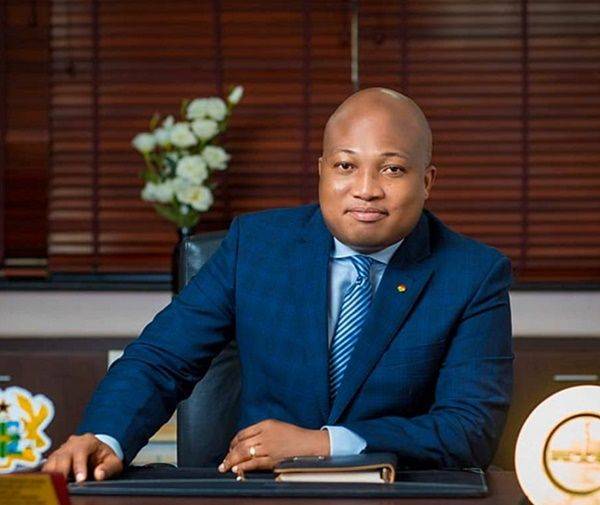
A Lecturer at the University of Professional Studies, Accra (UPSA), Dr Kwabena Bomfeh Jnr, has argued that Ghana’s system of governance is not truly party-based but instead revolves around the individual who occupies the presidency.
Speaking on JoyNews’ Newsfile programme on Saturday, January 24, Dr Bomfeh said there are fundamental flaws in the way politics is practised in Ghana, from party membership and leadership selection to how political authority is exercised once a party’s candidate assumes office.
“We need to accept that there is something fundamentally wrong with the way we have been doing politics in this country, in terms of how we join political parties, how people emerge into political party leadership positions and how they serve in their offices,” he said.
According to him, these weaknesses within political parties are directly transferred into government when a party-sponsored candidate either secures a majority in Parliament or wins the presidency.
“And then we transform that or translate that into government when the party’s sponsored candidate either forms a majority in Parliament or becomes the President,” Dr Bomfeh stated.
However, he stressed that Ghana does not, in reality, operate a system where governments are formed and driven by political parties as institutions.
“We don’t have party-formed governments in Ghana,” he said.
To illustrate his point, Dr Bomfeh cited the current administration, noting that while President John Dramani Mahama was elected on the ticket of the National Democratic Congress (NDC), governance is centred on the president as an individual rather than on the party as an institution.
“President John Dramani Mahama is the President of the Republic of Ghana elected on the ticket of the National Democratic Congress,” he said.
He added: “The government of the day is not the National Democratic Congress but the government of His Excellency John Dramani Mahama.”
Dr Bomfeh argued that this personalised nature of governance weakens party ideology, collective decision-making and institutional accountability, as policies and key decisions are driven more by presidential authority than by party structures and programmes.
He called for deeper reforms to strengthen political parties as institutions, improve internal democracy and redefine the relationship between parties and the executive.
According to him, without such changes, political parties would continue to function primarily as electoral vehicles for individuals, rather than as enduring institutions capable of shaping governance, ensuring accountability and delivering consistent policy direction.
DISCLAIMER: The Views, Comments, Opinions, Contributions and Statements made by Readers and Contributors on this platform do not necessarily represent the views or policy of Multimedia Group Limited.
DISCLAIMER: The Views, Comments, Opinions, Contributions and Statements made by Readers and Contributors on this platform do not necessarily represent the views or policy of Multimedia Group Limited.
Source: www.myjoyonline.com